
Nano-Enabled Spray-Induced Gene Silencing: A Promising Strategy for Managing Emerging and Established Plant Diseases in Nigeria
-
Ijeoma Adaku Nnebechukwu


Department of Plant Science and Biotechnology, University of Jos, Jos, Nigeria
Uchechukwu Christian OhaeriBioinformatician/Research Data Analyst, African Centre of Excellence in Phytomedicine Research and Development, University of Jos, Jos, Plateau State, Nigeria
Amabel Miracle Sumi-LotDepartment of Plant Science and Biotechnology, Plateau State University, Bokkos, Nigeria
Margaret Musa Atsen DanladiDepartment of Microbiology, Plateau State University, Bokkos, Nigeria
| Received 06 Apr, 2026 |
Accepted 20 Jul, 2026 |
Published 10 Aug, 2026 |
Crop production in Nigeria is increasingly threatened by insect pests, nematodes, fungi, bacteria, and viruses, resulting in substantial yield losses and compromised food security. Conventional chemical pesticides and fungicides remain the primary control measures, however, their prolonged use has contributed to environmental pollution, health concerns, and the emergence of resistant pest and pathogen populations. This review aims to evaluate the potential of nano-enabled Spray-Induced Gene Silencing (SIGS) as a sustainable and precise strategy for managing emerging and established plant diseases and pests in Nigeria. Spray-Induced Gene Silencing employs exogenous double-stranded RNA (dsRNA) to silence essential genes involved in pathogen virulence or pest survival. Recent advances in nanotechnology have significantly enhanced SIGS by incorporating nanocarriers, including lipid nanoparticles, polymeric nanoparticles, and bioclay nanosheets, which protect dsRNA from degradation, improve plant surface penetration, enable controlled release, and increase target specificity. Evidence from global and African studies demonstrates that nano-enabled SIGS effectively suppresses economically important pests and pathogens while minimizing adverse effects on non-target organisms and reducing reliance on synthetic pesticides. Integration of this technology into Integrated Pest Management (IPM) programs offers a promising approach for environmentally sustainable crop protection. Nevertheless, challenges related to large-scale dsRNA production, regulatory frameworks, biosafety, cost-effectiveness, and farmer adoption remain. Future research should prioritize field validation under Nigerian agroecological conditions, optimization of nanocarrier systems, and policy development to facilitate commercialization. Overall, nano-enabled SIGS represents a promising biotechnology with significant potential to enhance sustainable crop protection, agricultural productivity, and long-term food security in Nigeria.
INTRODUCTION
Agricultural productivity in Nigeria is significantly constrained by both established and emerging crop pests and plant diseases, posing serious threats to food security and economic stability. Cereals, legumes, and vegetables, staple and cash crops in the country, are particularly vulnerable to a diverse range of insect pests, nematodes, bacteria, viruses and pathogenic fungi1-4. The fall armyworm (Spodoptera frugiperda), stem borers, and plant-parasitic nematodes are among the major pests that com promise yield quantity and quality5,6. Emerging pests, often exacerbated by climate change and shifting agro-ecological conditions, are increasingly reported in regions previously considered pest-free, complicating management strategies2,7. Moreover, farmers’ perceptions of pest and plant disease severity often vary across landscapes, influenced by socio-economic and agronomic factors, which further affects timely intervention7,8.
Historically, plant disease and pest control in Nigeria has relied heavily on chemical fungicides and pesticides. While effective in the short term, these approaches are increasingly limited by several factors. Continuous exposure to sublethal doses has led to the development of plant disease and pest resistance, reducing long-term efficacy9. Chemical fungicides and pesticides also present environmental and health hazards, including contamination of soil and water, negative impacts on non-target organisms, and potential risks to human health10. Furthermore, conventional plant disease and pest management strategies often fail to address emerging plant diseases, require repeated applications, and can be cost-prohibitive for smallholder farmers, who constitute the majority of agricultural producers in Nigeria2,3. These limitations highlight the urgent need for alternative, sustainable plant disease management solutions that are both environmentally safe and cost-effective.
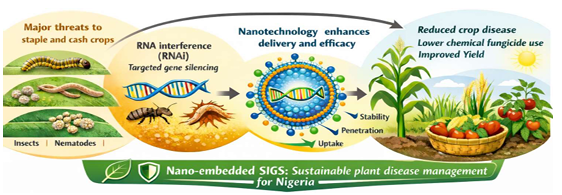
The RNA Interference (RNAi) is a natural cellular mechanism that regulates gene expression through sequence-specific degradation of target RNA molecules. Its application in agriculture allows for the targeted suppression of virulence genes critical for plant disease survival, growth, or pathogenicity, offering a highly specific alternative to broad-spectrum chemical fungicides and pesticides11,12. Spray-Induced Gene Silencing (SIGS) extends RNAi technology by applying Double-Stranded RNA (dsRNA) externally onto plants, with pathogens and pests uptake, triggering gene silencing and inhibiting plant disease and pest development13,14. The SIGS is particularly attractive because it does not require genetic modification of the host plant, reduces off-target effects, and can be integrated with existing plant disease and pest management systems15,16. Recent studies demonstrate its potential against fungal pathogens, insect pests, and nematodes, underscoring SIGS as a versatile and eco-friendly plant disease and pest control strategy17-19.
Despite its promise, SIGS faces several challenges, including dsRNA instability under field conditions, rapid degradation by environmental nucleases, and limited uptake by target pathogen and pests20,21. Nanotechnology offers a transformative solution by encapsulating dsRNA within engineered nanoparticles, which protect the molecules from degradation, enhance their stability, and facilitate efficient uptake by pathogens and pests22-24. Nanocarrier-mediated SIGS has been shown to prolong the protective effect of dsRNA, improve gene silencing efficiency, and potentially allow for lower application doses, reducing costs and environmental impact25-27. In the context of Nigeria, where emerging plant diseases and pest pressures and limited access to advanced agricultural technologies persist, nano-embedded SIGS represents a sustainable, precise, and scalable alternative for plant disease management.
This review aims to synthesize current knowledge on the application of nano-enabled spray-induced gene silencing (SIGS) for the management of established and emerging plant diseases in Nigeria. Specifically, it examines the challenges posed by plant diseases and the limitations of conventional management strategies, provides an overview of RNA interference (RNAi) and SIGS technologies, highlights the role of nanotechnology in improving the stability, delivery, and efficacy of SIGS, and identifies current research gaps, potential applications, and future prospects for integrating nano-enabled SIGS into sustainable plant disease management programs in Nigeria.
|
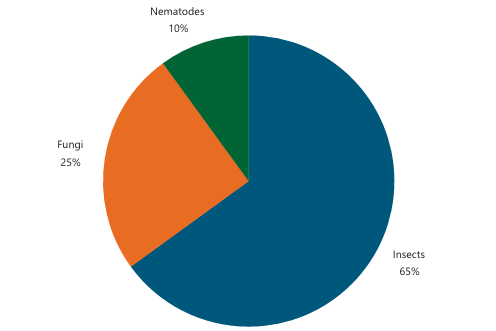
Crop pests and plant diseases in Nigeria: Crop production in Nigeria is severely affected by a wide spectrum of pests, including insect pests, plant-parasitic nematodes, and fungal pathogens, which collectively contribute to substantial yield losses and reduced crop quality as represented in Fig. 1. Staple crops such as maize, rice, sorghum, millet, cassava, and vegetables are particularly vulnerable, given their widespread cultivation across diverse agro-ecological zones2-4. Insect pests such as stem borers, rice leaf folders, aphids, whiteflies, and the invasive fall armyworm (Spodoptera frugiperda) remain among the most destructive, with maize production being especially impacted3,6. These pests not only cause direct feeding damage but also act as vectors for plant pathogens, further exacerbating crop losses.
Plant-parasitic nematodes represent another major but often under diagnosed threat to Nigerian agriculture. Species belonging to Meloidogyne, Pratylenchus, and Heterodera genera have been reported in cereals and other food crops, leading to impaired nutrient uptake, stunted growth, and yield decline1,5. Accurate identification of these nematodes remains challenging due to morphological similarities, highlighting the need for integrated diagnostic approaches combining molecular, biochemical, and morphometric tools1.
Fungal pathogens such as Botrytis cinerea, Rhizoctonia solani, and powdery mildew-causing fungi further contribute to crop disease burdens, particularly in humid regions of Nigeria10. These pathogens are responsible for post-harvest losses and reduced market value, especially in vegetables and cash crops. Collectively, the burden of pests and pathogens in Nigeria mirrors global trends, where pests account for a substantial proportion of yield losses in major food crops10.
Emerging pest threats in Nigeria are increasingly linked to climate change, globalization, and changes in agricultural practices. Rising temperatures, altered rainfall patterns, and increased frequency of extreme weather events have expanded the geographical range and survival capacity of several pests, including fall armyworm and cereal insect pests2,6. International trade and cross-border movement of agricultural commodities further facilitate the introduction of invasive species, complicating pest surveillance and control. These dynamics underscore the need for adaptable, sustainable, and precision-based pest management strategies suited to Nigeria’s evolving agro-ecological landscape2,7.
|
Overview of RNAi technology: The RNA Interference (RNAi) is a conserved, sequence-specific gene regulation mechanism that operates through the degradation or translational inhibition of messenger RNA (mRNA). The process is initiated by Double-Stranded RNA (dsRNA), which is cleaved by the enzyme Dicer into Small Interfering RNAs (siRNAs). These siRNAs are incorporated into the RNA-induced silencing complex (RISC), guiding the complex to complementary target mRNA sequences, resulting in gene silencing11,20.
The specificity of RNAi has been harnessed for pest control by targeting genes essential for pest survival, development, reproduction, or pathogenicity. In agricultural applications, RNAi enables selective suppression of pest genes without affecting non-target organisms, making it an attractive alternative to conventional chemical pesticides12,15. The RNAi-based pest control strategies have been demonstrated against a wide range of targets, including insect pests, nematodes, and phytopathogenic fungi17,21.
Compared to traditional pesticides, RNAi-based approaches offer several advantages. These include high target specificity, reduced environmental persistence, minimal toxicity to beneficial organisms, and compatibility with integrated pest management (IPM) systems11,13. Importantly, RNAi strategies can be rapidly adapted to emerging pests by redesigning dsRNA sequences, providing flexibility in response to evolving pest populations and resistance development12. These attributes position RNAi as a promising next-generation technology for sustainable crop protection.
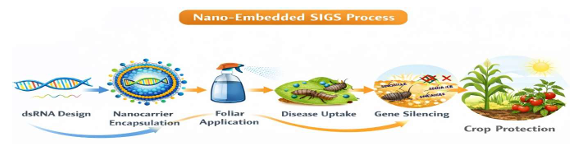
Spray-induced gene silencing (SIGS): Spray-Induced Gene Silencing (SIGS) is an RNAi-based pest management strategy that involves the exogenous application of dsRNA onto plant surfaces as represented pictorially in Fig. 2. Following application, dsRNA is absorbed by the plant or directly taken up by target pests and pathogens, triggering RNAi-mediated silencing of essential genes13,14. Unlike transgenic approaches, SIGS does not require genetic modification of the host plant, making it more socially acceptable and potentially easier to regulate and deploy15.
The SIGS differs fundamentally from Host-Induced Gene Silencing (HIGS). In HIGS, plants are genetically engineered to express dsRNA targeting pest or pathogen genes, whereas SIGS relies on topical delivery of dsRNA formulations11,13. While HIGS offers long-term protection, it faces regulatory, biosafety, and public acceptance challenges. SIGS, in contrast, provides a non-transgenic, flexible, and scalable alternative that can be integrated into existing agricultural practices14,15.
Globally, SIGS has shown considerable promise across multiple pest systems. Successful applications include the control of fungal pathogens such as powdery mildew and Botrytis cinerea, as well as insect pests and plant diseases affecting cereals and horticultural crops16,18,19. Step-by-step frameworks for SIGS implementation against fungal pathogens have further demonstrated its reproducibility and adaptability
|
| Table 1: | Nanocarrier types for dsRNA delivery | |||
| Nanocarrier type | Material | Benefits (Stability, Uptake) | Target pests/Pathogens |
| BioClay nanosheets | Layered Double Hydroxide (LDH), Magnesium/Aluminum | High UV protection, "BioClay" provides slow release (up to 30 days), non-toxic and biocompatible | PMMO Virus, Cucumber Mosaic Virus, Fusarium oxysporum |
| Polymer nanoparticles | Chitosan (natural polysaccharide) | Biocompatible, cationic nature binds dsRNA strongly, enhances midgut penetration in insects | Spodoptera frugiperda, Helicoverpa armigera, Plutella xylostella |
| Lipid-Based | Phospholipids, DOTAP, | Mimics natural cell membranes, | Botrytis cinerea (Fungus) |
| (Liposomes) | DODMA | excellent cellular uptake via endocytosis, protects against nucleases | Spodoptera frugiperda |
| Carbon-Based | Carbon Dots (CDs), Carbon Nanotubes (CNTs) | High surface-to-volume ratio, enables systemic translocation through plant | Nicotiana benthamiana (model), Grapevine leafroll virus, Aphids |
| Dendrimers | Star Polycations (SPc) | Controllable size/charge, condenses dsRNA into stable complexes, significantly improves cuticle penetration | Chilo suppressalis, Myzus persicae, Bemisia tabaci |
| Mesoporous silica | Silica (SiO2) | High loading capacity within pores, thermal stability, allows for "tunable" release rates | Fusarium oxysporum, Tobacco Mosaic Virus (TMV) |
| Peptide-Based | Cell-Penetrating Peptides (CPPs) | Rapidly crosses both plant cell walls and insect gut membranes, high specificity | Aphis glycines, Root-knot nematodes (Meloidogyne spp.) |
| Metal nanoparticles | Gold (Au) nanoparticles | Easily functionalized surface, allows for high-precision delivery and bio-imaging/traceability | Spodoptera frugiperda, Tribolium castaneum |
| Wytinck et al.20, Yang et al.29, Shafiqul Islam et al.23 | |||
under experimental and semi-field conditions17. These global case studies provide compelling evidence that SIGS can serve as a versatile and environmentally sustainable tool for pest management, with strong potential for adaptation to Nigerian cropping systems.
Role of nanotechnology in SIGS
Nano-carriers for dsRNA delivery: One of the primary challenges limiting the field application of Spray-Induced Gene Silencing (SIGS) is the rapid degradation of Double-Stranded RNA (dsRNA) in environmental conditions. Exposure to ultraviolet radiation, nucleases, and fluctuating pH reduces the stability and persistence of dsRNA, thereby limiting its efficacy20,21. Nanotechnology offers a transformative solution by encapsulating dsRNA within various nano-carriers, which protect the molecule and enhance its delivery to target pests or pathogens22,24.
Several types of nano-carriers have been developed for dsRNA delivery. Lipid-based nanoparticles provide biocompatibility, membrane fusion capabilities, and enhanced cellular uptake22,23. Polymeric nanoparticles, including chitosan and polyethyleneimine-based carriers, offer controlled release and protection against enzymatic degradation25,28. Clay nanosheets, such as layered double hydroxides, have been shown to adsorb dsRNA effectively, prolonging its stability on plant surfaces and facilitating uptake by pests26,29.
Additionally, artificial nanovesicles and engineered nanotransporters have been explored for targeted delivery, improving gene silencing efficiency and reducing required application doses27,30. Collectively, these nano-carriers serve as protective vehicles that enhance dsRNA stability, prevent premature degradation, and enable efficient uptake by pests and pathogens (Table 1 and Fig. 3).
Mechanisms enhancing efficacy: Nano-carrier systems improve SIGS efficacy through multiple mechanisms. First, they enhance penetration into plant surfaces, overcoming the barrier posed by the cuticle and facilitating the transfer of dsRNA to pest feeding sites or pathogen infection sites18,22. Second, nano-carriers allow for controlled and sustained release of dsRNA, ensuring prolonged gene silencing effects and reducing the frequency of application25,31. Third, nano-formulations improve target specificity, as dsRNA sequences can be precisely designed against essential pest genes, reducing off-target effects on non-target organisms and beneficial insects21,26.
Recent studies highlight the synergistic effects of combining nanocarriers with dsRNA. For instance, lipid-based nano-formulations enhanced RNA uptake by fungal pathogens and insect pests, leading to more consistent and robust suppression of target genes22,32. Similarly, polymeric and clay-based carriers were shown to stabilize dsRNA in challenging environmental conditions while maintaining high silencing efficiency against both fungal and bacterial plant pathogens18,29. These findings underscore the critical role of nanotechnology in addressing the inherent limitations of conventional SIGS applications.
Safety and environmental considerations: While nano-embedded SIGS represents a promising strategy, its environmental safety and regulatory aspects must be carefully considered. Many nanomaterials used as carriers, such as lipids, chitosan, and certain clays, are biodegradable and minimally toxic, reducing the risk of accumulation in soil or water systems22,24. Nevertheless, potential impacts on non-target organisms, including beneficial insects, soil microbiota, and aquatic organisms, require further investigation21,33. Some studies have reported transient effects on phyllosphere microbiota in cereal crops following SIGS application, highlighting the need for careful assessment of ecological interactions33.
From a regulatory perspective, nano-enabled SIGS offers advantages over traditional chemical pesticides due to its biodegradability and target specificity, potentially facilitating faster adoption and approval in countries like Nigeria12,23. However, national frameworks for the evaluation of nano-formulated biopesticides are still developing, emphasizing the need for comprehensive biosafety guidelines, standardized risk assessments, and monitoring of field applications22,34. Addressing these safety and regulatory considerations will be critical for the successful deployment of nano-embedded SIGS in sustainable agriculture.
Applications of nano-embedded SIGS in pest management
Controlling established pests: Nigeria’s agriculture faces significant challenges from well-established pests such as fall armyworm (Spodoptera frugiperda), stem borers, and various nematodes, which threaten staple crops including maize, rice, and sorghum1,3,6. Conventional chemical pesticides have been widely applied to manage these pests, however, their effectiveness is declining due to pesticide resistance, environmental contamination, and non-target toxicity2,9.
Nano-embedded SIGS presents a promising alternative. Studies in Africa and other regions have demonstrated that dsRNA-based sprays, when delivered with nanocarriers, effectively reduce pest populations. For instance, nanocarrier-mediated dsRNA targeting essential genes of lepidopteran pests has shown significant mortality and suppressed feeding behavior22,34. In fungal pathogens such as Botrytis cinerea, SIGS delivered via lipid and polymeric nanoparticles significantly reduced infection severity, highlighting the versatility of this approach for multiple pest types18,19.
Moreover, nano-embedded SIGS has been shown to prolong dsRNA stability, enhancing its persistence on leaf surfaces and improving uptake by target pests, which can reduce the frequency of applications and mitigate the challenges of rapid environmental degradation31,32. These characteristics are especially critical for smallholder farmers in Nigeria, where consistent access to chemical pesticides may be limited7,8.
Combating emerging pests: Climate change, global trade, and agro-ecological shifts have facilitated the emergence of new pest threats in Nigeria, including invasive insects, viral vectors, and pathogenic fungi2,6. Early intervention is essential to prevent these pests from compromising food security. Nano-embedded SIGS allows for rapid adaptation, as dsRNA sequences can be designed specifically against newly identified pest genes, offering a highly targeted and selective management tool12,22.
For example, emerging nematode species that threaten cereal crops can potentially be controlled via dsRNA sprays delivered through polymeric or clay-based nanocarriers, reducing nematode reproduction and feeding1,5. Similarly, SIGS approaches may suppress emerging viral or bacterial pathogens by silencing genes essential for replication or virulence21,26. Integrating these strategies proactively can safeguard crop yields and support national food security goals in the face of unpredictable pest invasions.
Integration with existing pest management strategies: Nano-embedded SIGS is highly compatible with Integrated Pest Management (IPM) approaches. By providing a targeted, environmentally friendly alternative to chemical pesticides, SIGS can complement biological control agents, crop rotation, and cultural practices13,22. This integration can reduce chemical pesticide use, lowering environmental contamination and minimizing risks to non-target organisms9,33.
Field-level studies have highlighted that SIGS can be combined with conventional pest management tools, offering additive or synergistic effects. For instance, foliar sprays of dsRNA in combination with pheromone traps or biocontrol agents can enhance pest suppression while maintaining ecological balance17,20. Such strategies are particularly relevant for Nigerian smallholder farmers, where cost-effective and sustainable pest management is critical7,8.
By integrating nano-embedded SIGS into IPM frameworks, it is possible to enhance pest specificity, reduce resistance development, and improve overall crop productivity, paving the way for a sustainable agricultural future in Nigeria and across sub-Saharan Africa.
CHALLENGES AND LIMITATIONS
Technical limitations: While nano-embedded SIGS has demonstrated significant potential in pest management, several technical challenges impede its large-scale adoption in Nigeria. A primary limitation is production cost, as synthesizing high-quality dsRNA and incorporating it into nanocarriers remains expensive compared to conventional pesticides22,34. The cost burden is compounded by the need for specialized equipment and trained personnel for nanocarrier formulation and dsRNA handling, which may not be widely accessible to smallholder farmers25.
Another technical hurdle is production scalability. Current laboratory-scale methods for dsRNA synthesis and nanoformulation are not easily translatable to field-scale applications. For example, ensuring consistent dsRNA loading into nanoparticles while maintaining stability under environmental conditions such as UV exposure, rain, and temperature fluctuations remains challenging29,31. Additionally, certain pests or pathogens exhibit variable uptake efficiency of dsRNA, necessitating tailored delivery strategies for each target organism, which complicates generalized formulations20,21.
Regulatory and biosafety hurdles in Nigeria: Regulatory frameworks for RNAi-based technologies, particularly nano-embedded SIGS, are still underdeveloped in Nigeria35. Unlike traditional chemical pesticides, RNAi-based biopesticides straddle the domains of biotechnology and chemical regulation, creating ambiguities in approval processes12,22. The biosafety concerns include the potential off-target effects of dsRNA on non-target organisms, environmental persistence of nanocarriers, and unintended gene silencing in beneficial insects or soil microbes24,33.
Addressing these issues requires robust risk assessment protocols, post-application monitoring, and clear regulatory guidance, which are currently limited in Nigeria. The absence of standardized national policies on RNAi-based nanobiopesticides slows adoption and investor confidence, despite promising research outcomes22,23.
Knowledge gaps and farmer adoption issues: Even when technical and regulatory challenges are resolved, farmer adoption of nano-embedded SIGS presents another significant limitation. Many smallholder farmers in Nigeria rely on traditional chemical pesticides and may have limited awareness of RNAi technologies or nanocarrier applications7,8. Knowledge gaps extend to understanding proper application rates, timing, and safety practices, which are critical for effective pest control and minimizing environmental impacts3,4.
Additionally, cultural and socio-economic factors influence adoption. Farmers may perceive RNAi-based sprays as complex or unreliable compared to conventional products, particularly when immediate visible pest mortality is not evident2,7. Extension services and training programs are therefore essential to bridge these gaps and ensure that the benefits of SIGS technology are translated into practical, field-level pest management solutions.
FUTURE PERSPECTIVES AND RECOMMENDATIONS
Research directions: To fully realize the potential of nano-embedded SIGS in Nigerian agriculture, focused research is necessary on several fronts. First, there is a need to optimize dsRNA formulations for stability under local environmental conditions, including high temperatures, intense sunlight, and heavy rainfall29,31. Research should also explore novel nanocarriers, such as biodegradable polymers and clay nanosheets, that enhance dsRNA uptake and controlled release while minimizing environmental persistence24,27.
Second, studies should investigate species-specific RNAi targets for prevalent and emerging pests in Nigeria, including fall armyworm, stem borers, and nematodes, ensuring high efficacy while reducing off-target effects1,5,6. Cross-disciplinary research integrating molecular biology, nanotechnology, and agronomy is essential to design field-applicable SIGS solutions that are both effective and sustainable22,25.
POLICY AND REGULATORY RECOMMENDATIONS
For successful adoption, the Nigerian government should develop clear regulatory frameworks for RNAi-based nanobiopesticides. These should include standardized risk assessment protocols, guidelines for biosafety testing, and monitoring strategies for off-target impacts on beneficial organisms and soil health12,22. Incentives such as subsidies, tax breaks, or grants could support local production of dsRNA formulations and encourage private-sector investment.
Moreover, policymakers should promote collaboration between regulatory bodies, research institutions, and agricultural extension services to bridge the gap between laboratory research and field application, ensuring that SIGS technologies meet both safety and efficacy standards22,23.
Farmer education and capacity building: A critical component of future adoption is farmer education and training. Extension programs should focus on raising awareness about the benefits, application methods, and safety of nano-embedded SIGS, particularly for smallholder farmers, who form the majority of Nigeria’s agricultural workforce7,8.
Training initiatives could include demonstration trials, mobile application-based advisory systems, and participatory workshops, which allow farmers to observe the effectiveness of SIGS firsthand. Emphasizing cost-effectiveness, reduced chemical pesticide use, and environmental sustainability will improve acceptance and encourage widespread adoption2-4.
Integrating SIGS into sustainable pest management: Nano-embedded SIGS should be promoted as a component of integrated pest management (IPM) rather than a standalone solution. By combining SIGS with biological control agents, crop rotation, resistant varieties, and judicious chemical use, farmers can achieve robust pest control with minimal environmental impact13,15,22.
Future research should focus on long-term monitoring to assess the cumulative effects of SIGS on pest populations, beneficial insects, and soil microbiota, ensuring that these strategies contribute to resilient and sustainable agricultural systems18,33.
Nano-embedded Spray-Induced Gene Silencing (SIGS) represents a cutting-edge, sustainable approach to pest management in agriculture. By leveraging nanotechnology to enhance the stability, uptake, and targeted delivery of dsRNA, this strategy offers precise control of both established and emerging pests, while minimizing the negative environmental and health impacts associated with conventional chemical pesticides22,29,31.
For Nigerian agriculture, which faces significant challenges from pests such as fall armyworm, stem borers, and plant-parasitic nematodes, nano-embedded SIGS has the potential to improve crop productivity, enhance food security, and reduce dependence on synthetic agrochemicals1,5,6. Its integration into Integrated Pest Management frameworks can ensure long-term, sustainable pest control while preserving beneficial organisms and the broader ecosystem15,33.
To fully realize this potential, there is a need for continued research on locally relevant dsRNA targets, optimized nanocarrier formulations, and field validation, alongside the establishment of robust regulatory frameworks and biosafety guidelines12,22,25. Equally important is farmer education and capacity building to facilitate responsible adoption and effective application of these technologies7,8,35.
CONCLUSION
Agricultural productivity in Nigeria is constrained by both established and emerging crop pests and plant diseases, posing serious threats to food security. Insect pests, plant-parasitic nematodes, bacteria, viruses and fungal pathogens have been implicated with substantial yield losses and reduced crop quality. In Nigeria, pest and diseases associated with plants have been controlled by the use of chemical fungicides and pesticides which has increasingly become less effective due to exposure to sublethal doses resulting in a wide range of plant disease and pest resistance, reducing long-term efficacy. However, nano-embedded SIGS offers a transformative pathway toward sustainable, efficient, and environmentally friendly pest management in Nigeria, with potential to the improvement in food security and food quality. With coordinated efforts across research, policy, and extension services, this technology can play a pivotal role in securing the future of Nigerian agricultural sector.
In conclusion, nano-embedded SIGS offers a transformative pathway toward sustainable, efficient, and environmentally responsible pest management in Nigeria. With coordinated efforts across research, policy, and extension services, this technology can play a pivotal role in securing the future of Nigerian agriculture.
SIGNIFICANCE STATEMENT
This review highlights nano-enabled Spray-Induced Gene Silencing (SIGS) as an innovative and environmentally sustainable alternative to conventional pesticides for managing plant diseases and pests in Nigeria. By integrating nanotechnology with RNA interference, this approach enhances the stability, delivery, and efficacy of dsRNA while reducing environmental contamination and pesticide resistance. The review provides a foundation for future research, policy development, and commercialization of nano-enabled SIGS to strengthen integrated pest management, improve crop productivity, and enhance food security in Nigeria.
REFERENCES
- Abdulsalam, S., A.S. Shaibu, J.M. Ojonuba, H. Peng and D. Peng, 2021. Nematode pests of some major cereals in Nigeria: Need for integration of morphological/morphometrical, biochemical, and molecular diagnostic approaches for accurate identification Plant Pathol., 70: 1535-1551.
- Benjamin, J., O. Idowu, O.K. Babalola, E.V. Oziegbe, D.O. Oyedokun, A.M. Akinyemi and A. Adebayo, 2024. Cereal production in Africa: The threat of certain pests and weeds in a changing climate-a review. Agric. Food Secur., 13.
- Ogah, E.O. and F.E. Nwilene, 2017. Incidence of insect pests on rice in Nigeria: A review. J. Entomol., 14: 58-72.
- Ofuya, T.I., A.I. Okunlola and G.N. Mbata, 2023. A review of insect pest management in vegetable crop production in Nigeria. Insects, 14.
- Aghale, D.N., K.C. Egbucha and O.J. Umeh, 2017. Plant parasitic nematode threat to Nigerian agricultural food security. Int. J. Adv. Res. Bot., 3: 15-21.
- Adunola, M.P., L.S. Fayeun and A.B. Fadara, 2021. Impact of climate change on armyworm infestation on maize in Nigeria: A review. J. Plant Breed. Crop Sci., 13: 158-167.
- Zhang, W., E. Kato, F. Bianchi, P. Bhandary, G. Gort and W. van der Werf, 2018. Farmers’ perceptions of crop pest severity in Nigeria are associated with landscape, agronomic and socio-economic factors. Agric. Ecosyst. Environ., 259: 159-167.
- Akinyemi, A.O., E. Fadele and A.E. Ojeleye, 2023. Exploring a mobile application for pest and disease symptomatic diagnosis in food crops in Nigeria: Implications of its use by smallholder farmers in Sub-Saharan Africa. Ife J. Sci., 25: 001-002.
- Agathokleous, E., C. Sonne, G. Benelli, E.J. Calabrese and R.N.C. Guedes, 2023. Low-dose chemical stimulation and pest resistance threaten global crop production. Sci. Total Environ., 878.
- Savary, S., L. Willocquet, S.J. Pethybridge, P. Esker, N. McRoberts and A. Nelson, 2019. The global burden of pathogens and pests on major food crops. Nat. Ecol. E, 3: 430-439.
- Hernández-Soto, A. and R. Chacón-Cerdas, 2021. RNAi crop protection advances. Int. J. Mol. Sci., 22.
- Qi, H.Y., D.D. Zhang, B. Liu, J.Y. Chen, D. Han and D. Wang, 2024. Leveraging RNA interference technology for selective and sustainable crop protection. Front. Plant Sci., 15.
- Wang, M. and H. Jin, 2017. Spray-induced gene silencing: A powerful innovative strategy for crop protection. Trends Microbiol., 25: 4-6.
- Chen, C., M. Imran, X. Feng, X. Shen and Z. Sun, 2025. Spray-induced gene silencing for crop protection: Recent advances and emerging trends. Front. Plant Sci., 16.
- Cagliari, D., N.P. Dias, D.M. Galdeano, E.Á. dos Santos, G. Smagghe and M.J. Zotti, 2019. Management of pest insects and plant diseases by non-transformative RNAi. Front. Plant Sci., 10.
- McRae, A.G., J. Taneja, K. Yee, X. Shi and S. Haridas et al., 2023. Spray-induced gene silencing to identify powdery mildew gene targets and processes for powdery mildew control. Mol. Plant Pathol., 24: 1168-1183.
- Mosquera, S., M. Ginésy, I.T. Bocos-Asenjo, H. Amin, S. Diez-Hermano, J.J. Diez and J. Niño-Sánchez, 2025. Spray-induced gene silencing to control plant pathogenic fungi: A step-by-step guide. J. Integr. Plant Biol., 67: 801-825.
- Spada, M., C. Pugliesi, M. Fambrini, D. Palpacelli, A. Caneo and S. Pecchia, 2025. Spray-induced gene silencing (SIGS): Nanocarrier-mediated dsRNA delivery improves RNAi efficiency in the management of lettuce gray mold caused by Botrytis cinerea. Agronomy, 15.
- Wu, F., L. Yan, X. Zhao, C. Lv and W. Jin, 2024. Development of an RNA nanostructure for effective Botrytis cinerea control through spray-induced gene silencing without an extra nanocarrier. J. Fungi, 10.
- Wytinck, N., C.L. Manchur, V.H. Li, S. Whyard and M.F. Belmonte, 2020. dsRNA uptake in plant pests and pathogens: Insights into RNAi-based insect and fungal control technology., Plants, 9.
- Ray, P., D. Sahu, R. Aminedi and D. Chandran, 2022. Concepts and considerations for enhancing RNAi efficiency in phytopathogenic fungi for RNAi-based crop protection using nanocarrier-mediated dsRNA delivery systems. Front. Fungal Biol., 3.
- Chen, A., L. Halilovic, J.H. Shay, A. Koch, N. Mitter and H. Jin, 2023. Improving RNA-based crop protection through nanotechnology and insights from cross-kingdom RNA trafficking. Curr. Opin. Plant Biol., 76.
- Shafiqul Islam, M., M.R. Ahmed, M. Noman, Z. Zhang and J. Wang et al., 2025. Integrating RNA interference and nanotechnology: A transformative approach in plant protection. Plants, 14.
- Jalaluddin, N.S.M., M. Asem, J.A. Harikrishna and A.A.H.A. Fuaad, 2023. Recent progress on nanocarriers for topical-mediated RNAi strategies for crop protection-a review. Molecules, 28.
- Mathur, S., A. Chaturvedi and R. Ranjan, 2025. Advances in RNAi-based nanoformulations: Revolutionizing crop protection and stress tolerance in agriculture. Nanoscale Adv., 7: 1768-1783.
- Pal, G., K.D. Ingole, P.S. Yavvari, P. Verma and A. Kumari et al., 2024. Exogenous application of nanocarrier-mediated double‐stranded RNA manipulates physiological traits and defence response against bacterial diseases. Mol. Plant Pathol., 25.
- Qiao, L., J. Niño-Sánchez, R. Hamby, L. Capriotti, A. Chen, B. Mezzetti and H. Jin, 2023. Artificial nanovesicles for dsRNA delivery in spray-induced gene silencing for crop protection. Plant Biotechnol. J., 21: 854-865.
- Quilez-Molina, A.I., J.N. Sanchez and D. Merino, 2024. The role of polymers in enabling RNAi-based technology for sustainable pest management. Nat. Commun., 15.
- Yang, W., B. Wang, G. Lei, G. Chen and D. Liu, 2022. Advances in nanocarriers to improve the stability of dsRNA in the environment. Front. Bioeng. Biotechnol., 10.
- Xing, Y., H. Jiang and L. Cai, 2025. Engineered nanotransporters for efficient RNAi delivery in plant protection applications. J. Integr. Plant Biol., 67: 1223-1245.
- Wang, Y., Q. Yan, C. Lan, T. Tang, K. Wang, J. Shen and D. Niu, 2023. Nanoparticle carriers enhance RNA stability and uptake efficiency and prolong the protection against Rhizoctonia solani. Phytopathol. Res., 5.
- Yan, S., B.Y. Ren and J. Shen, 2021. Nanoparticle-mediated double‐stranded RNA delivery system: A promising approach for sustainable pest management. Insect Sci., 28: 21-34.
- Sundararajan, P., S. Ghosh, B.G. Kelbessa, S.C. Whisson, M. Dubey, A. Chawade and R.R. Vetukuri, 2025. The impact of spray-induced gene silencing on cereal phyllosphere microbiota. Environ. Microbiome, 20.
- Pugsley, C.E., R.E. Isaac, N.J. Warren and O.J. Cayre, 2021. Recent advances in engineered nanoparticles for RNAi-mediated crop protection against insect pests. Front. Agron., 3.
- Nnebechukwu, I.A., U.C. Ohaeri, D.M.M. Atsen, S.L.A. Miracle and G.D. Abraham, 2026. Ecological safety of RNAi biofungicides: Assessing the impact of spray-induced gene silencing on the indigenous phyllosphere microbiome of tropical staples. Plant Sci. Rev., 7: 1-4.
How to Cite this paper?
APA-7 Style
Nnebechukwu,
I.A., Ohaeri,
U.C., Sumi-Lot,
A.M., Atsen Danladi,
M.M. (2026). Nano-Enabled Spray-Induced Gene Silencing: A Promising Strategy for Managing Emerging and Established Plant Diseases in Nigeria. Asian Journal of Emerging Research, 8(1), 106-116. https://doi.org/10.21124/ajer.2026.106.116
ACS Style
Nnebechukwu,
I.A.; Ohaeri,
U.C.; Sumi-Lot,
A.M.; Atsen Danladi,
M.M. Nano-Enabled Spray-Induced Gene Silencing: A Promising Strategy for Managing Emerging and Established Plant Diseases in Nigeria. Asian J. Emerg. Res 2026, 8, 106-116. https://doi.org/10.21124/ajer.2026.106.116
AMA Style
Nnebechukwu
IA, Ohaeri
UC, Sumi-Lot
AM, Atsen Danladi
MM. Nano-Enabled Spray-Induced Gene Silencing: A Promising Strategy for Managing Emerging and Established Plant Diseases in Nigeria. Asian Journal of Emerging Research. 2026; 8(1): 106-116. https://doi.org/10.21124/ajer.2026.106.116
Chicago/Turabian Style
Nnebechukwu, Ijeoma, Adaku, Uchechukwu Christian Ohaeri, Amabel Miracle Sumi-Lot, and Margaret Musa Atsen Danladi.
2026. "Nano-Enabled Spray-Induced Gene Silencing: A Promising Strategy for Managing Emerging and Established Plant Diseases in Nigeria" Asian Journal of Emerging Research 8, no. 1: 106-116. https://doi.org/10.21124/ajer.2026.106.116

This work is licensed under a Creative Commons Attribution 4.0 International License.